every day before March 24 Nikhl and student of Bhatte Danda village had been journeying to school
During the lockdown, public schools in Nepal announced the results for their students for the academic year 2019/2020. Books were distributed for the new academic year, but apart from teaching through radio and television, interactions with teachers were limited. In contrast, private schools had different management strategies.
Children would walk from 8 am to reach school by 10 am, descending the hills and returning at 6 pm. Fortunately, even if they fail and discontinue their education, the hills offer opportunities where firewood for cooking, grass for their domestic animals, and some vegetables like cabbage, potato, beans, and radish grow without the water and care needed in other parts of Nepal.
The long days of walking have affected the habit, raising concerns that children might stop attending school. Extended holidays have often led to children, especially girls in rural Nepal, discontinuing their education. Those living in areas unconnected by roads and facing geographical challenges have developed a mindset that educationally qualified individuals are destined to work for others, so it is better to manage their own household work, such as caring for domestic animals, working in the fields for themselves and neighbors, and relying on the hills for livestock and energy.
As the world evolves, adhering to the survival examples set by parents and ancestors could leave them behind. Therefore, despite school attendance not allowing time for preparation and study, and seeming like a waste of time, they have not ceased attending school. Recognizing this, Console Mission initiated a project to motivate and develop self-confidence. Amidst the COVID-19 situation, which has impacted schools more than the earthquake in 2015, this project includes:
- Managing study spaces
- Facilitating interactions with students from the same grade
- Providing educational coaching
- Conducting health education and hygiene practical activities
- Supplying personal health care materials
- Providing notebooks and stationery
- Organizing indoor and outdoor games
- Offering dance, speaking, and essay writing competitions
The initiative has been successful in motivating students to engage with their books, with assistance from trained senior students.
Monitoring educational performance and progress plays a crucial role; without it, children might fall behind academically. This year, Nikhil’s results indicated that he should remain in the same grade. Although he considered stopping, he was encouraged to continue by “Our Study Place” (OSP) in his village. “Console Mission” has been operating OSP in another village, and its positive impact led to requests from additional villages. During the lockdown, OSP was effectively implemented in Nikhil’s village and expanded to two more villages.
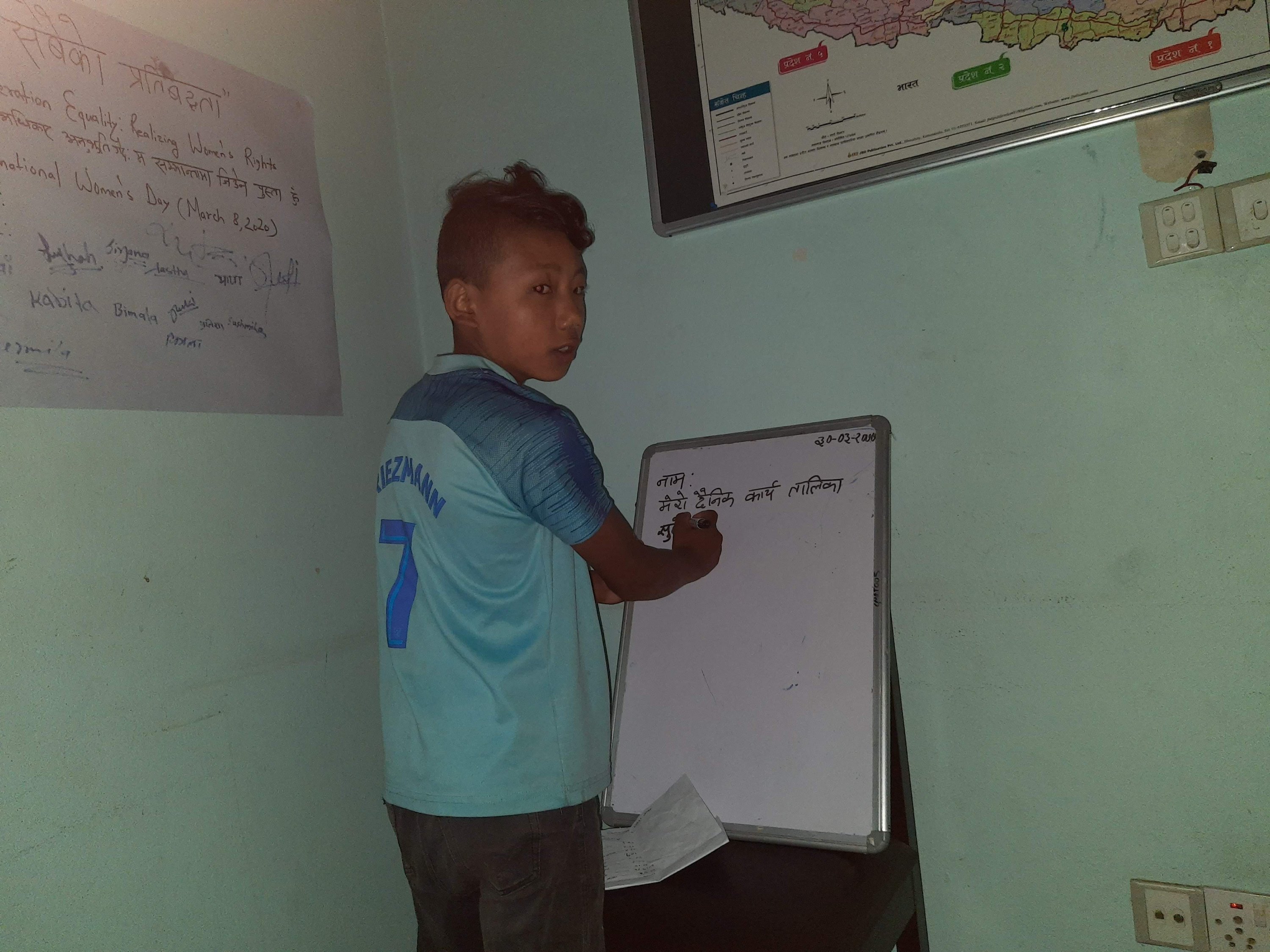 Nikhil is writing a daily timetable based on what he has learned.
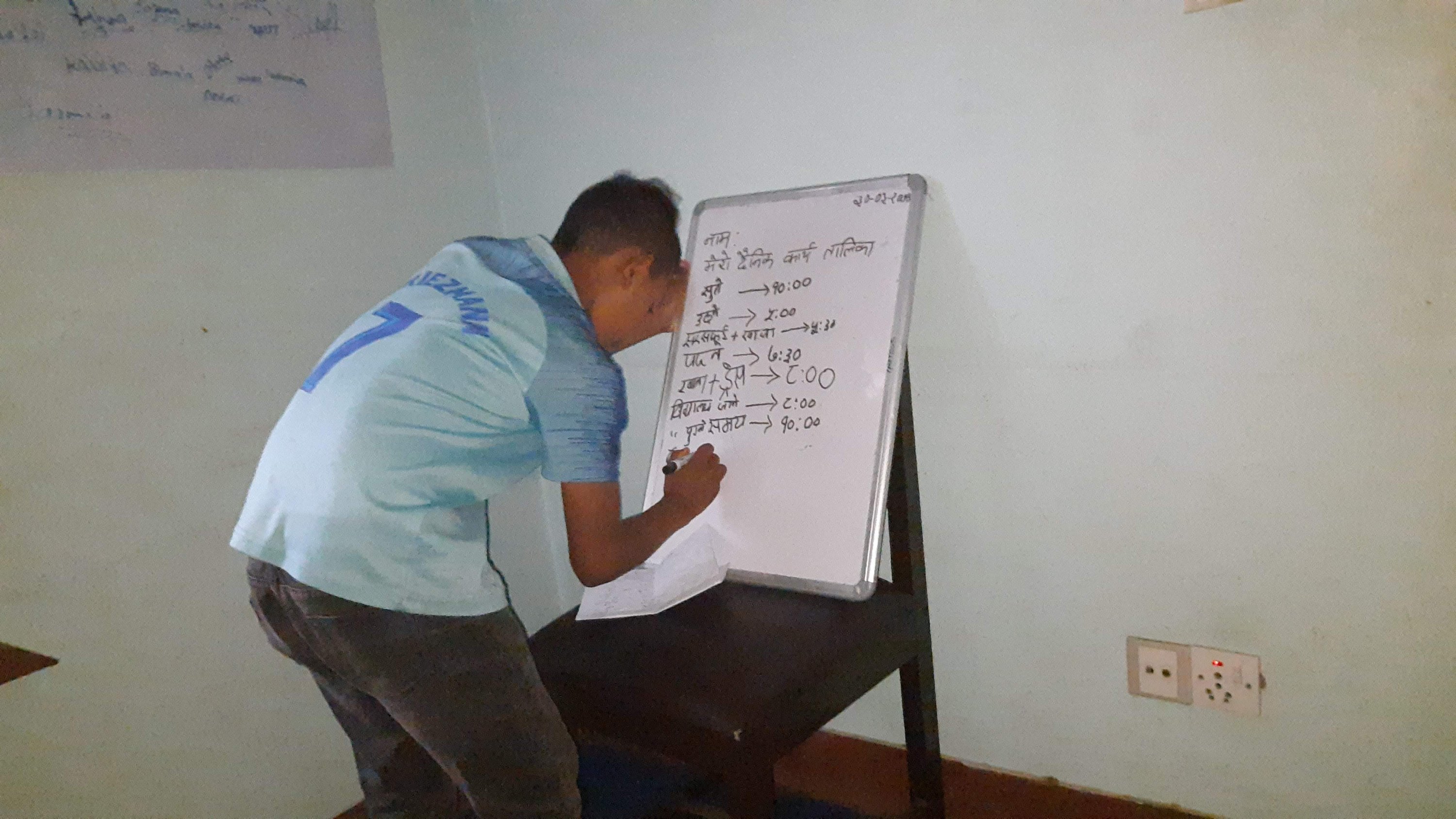 Copying from his note
The second step involved a consultation meeting that was initially impossible due to travel constraints for the staff to reach the village or for him to come over. However, in the second week, a volunteer managed to bring him. He stayed for two days, and during this visit, he was instructed on time management. His timetable was reviewed, which revealed that “he did not have time for study.” This timetable offered some hope, but it was also necessary to consult his parents to provide time and an environment conducive to studying.
Video: Nikhil presenting his time table
In the hills, we lead a distinct and unique life. During the monsoon, it becomes challenging to walk, and there’s a risk of landslides.