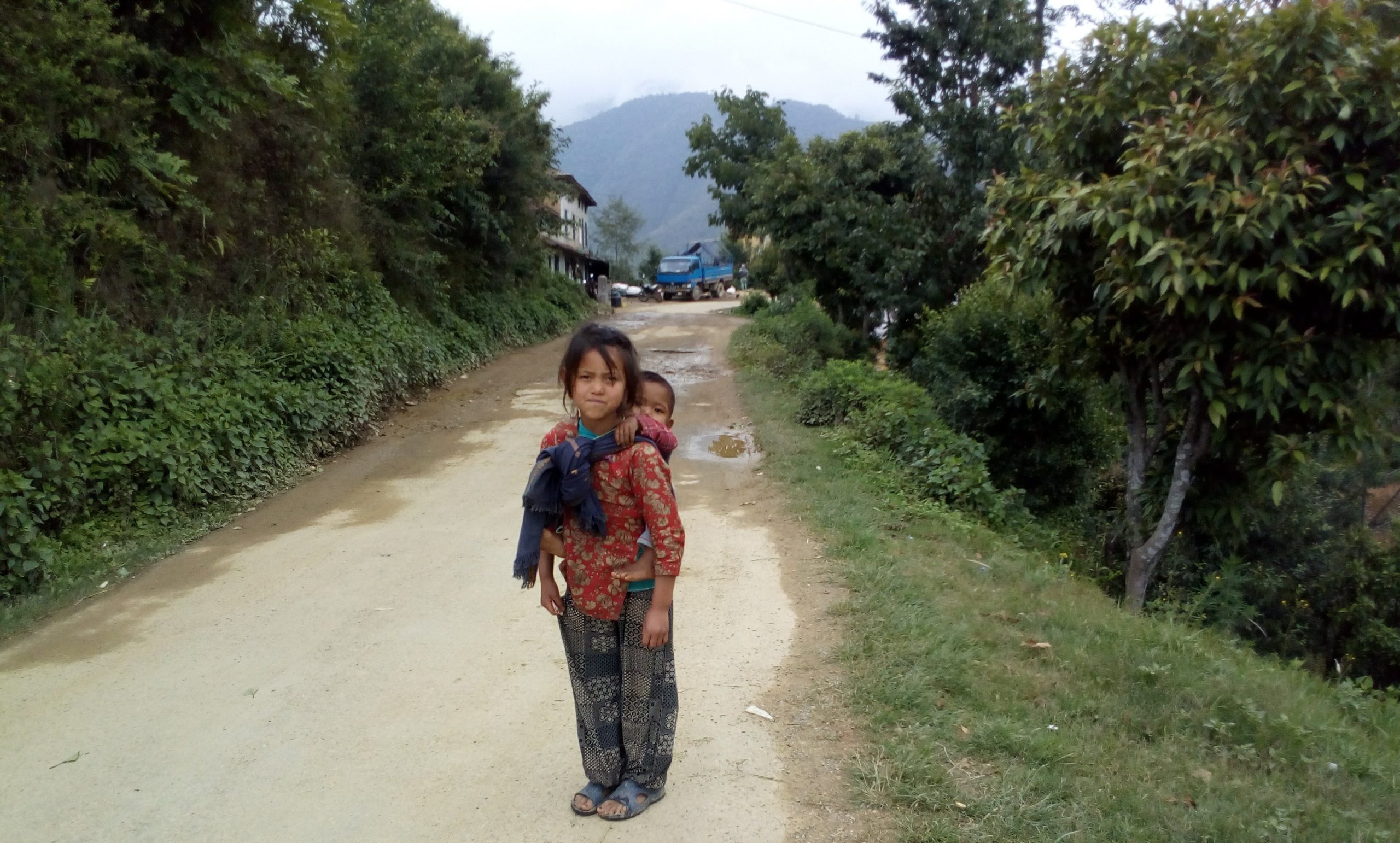
Console Mission is the English translation of Dilasha Aviyan, a grassroots NGO founded in Nepal in 2010. From the beginning, our focus has been on listening to communities, learning their needs, and building sustainable pathways for progress.The 2015 earthquake was a turning point, pulling us into rural villages where we discovered that slow progress was rooted not only in physical damage but in long‑standing social and cultural barriers. Through test projects and continuous learning, we realized that sustainable change requires presence, responsibility, and sensitivity to cultural practices.
Today, as Console Mission, we raise awareness about education, safeguard children, and create environments where families can see the wider world and participate in development. Our mission is clear: when communities have quality human resources through education, they build hygiene, peace, and dignity. This creates an environment where people—both Nepalis and visitors from abroad—can enjoy Nepal’s natural heritage and rich cultures. Fostering tourism in this way also brings financial growth, allowing a small country like Nepal—with its mountains, hills, and plains—to depend more on tourism as a sustainable driver of progress.
We believe progress is not imposed but built together. By embedding safeguarding, modernizing livelihoods, and strengthening ward‑level health and education systems, Console Mission empowers communities to take responsibility, work collaboratively, and contribute with dignity to Nepal’s future.
Our Story
When a team if 7 (2 male and 5 female) was in a process to get legal status by registering at the relevant Government office, a foreigner associated with NGOs questioned about its necessities. Because there were several. That put Dilasha Aviyan in a position to explore its need really. Therefore, when the chairman of Dilasha Aviyan brought a project proposal template, the working team member did not find it useful. For 5 years starting from April 2010 to 2015, Dilasha Aviyan focused in finding out the need that it must focus on. Then found out which areas to focus, in a learning stage still how to do and priority beneficiary.
The earthquake pulled Dilasha Aviyan to reach the rural village communities situated in the district that was more harmed by it. During and after a little while Dilasha Aviyan sensed the main root cause of slow progress and the possibilities of the continuous need for shelter home.
To address the need, in 2016 and 2017, a project was started to provide fertilizer to strengthen the root. It went on with the initial need assessment survey done during earthquake and more studies.
At first Dilasha Aviyan thought the project is the solution. But since it did not happen. Based on the management principle, a physical presence was planned. That was going to occur some financial costs. Therefore, it was started as a test project for a 4-month period.
Distracting with the continuation of educational materials management like uniform and notebook did not work.
It was found that what Dilasha Aviyan indicated barrier was found to be accepted from long time back. It is considered cultural practice. The matter was sensitive. The presence of government bodies in the areas was, in the case of this matter, showed not presence. The government was really to apply law, therefore that was an object create conflict. The local people might ask alternative solution to what they had been practicing as culture. But what does the government do? Therefore, they needed help. NGO like Dilasha Aviyan is directed or say permitted or even welcomed to focus on social change that help for progress.
Explore Nepal
Nepal is a country in South Asia that lies along the southern slopes of the Himalayan mountain ranges. It is bordered by China to the north and India to the east, south, and west. It is a landlocked country with no access to the sea. Nepal has a diverse geography, including fertile plains, subalpine forested hills, and eight of the world’s ten tallest mountains, including Mount Everest, the highest point on Earth. Nepal’s capital and largest city is Kathmandu1.
Nepal is also a country with a rich history and culture. It is the birthplace of Siddhartha Gautama, who later became known as the Buddha, the founder of Buddhism. Nepal has many ancient temples, monuments, and festivals that reflect its religious and ethnic diversity. Nepal is home to more than 125 ethnic groups and 123 languages1. The majority of Nepalis are Hindu, but there are also Buddhists, Muslims, Kirant, Christians, and other faiths1.
Nepal is a federal parliamentary republic with a multi-party system. It has seven provinces and 77 districts. The head of state is the president and the head of government is the prime minister. Nepal has faced many political and social challenges in its history, such as civil war, monarchy, democracy, and constitutional crisis. Nepal adopted its current constitution in 2015, which established it as a secular and inclusive state1.
Nepal is one of the least developed countries in the world, with a low GDP per capita and a high poverty rate. It faces many economic and environmental problems, such as unemployment, inequality, corruption, natural disasters, climate change, and pollution. Nepal relies heavily on agriculture, tourism, remittances, and foreign aid for its income. Nepal is also a member of various regional and international organizations, such as SAARC, BIMSTEC, UN, NAM, and WTO1.
Nepal is a beautiful and fascinating country that has much to offer to its people and visitors. It has a unique natural and cultural heritage that makes it a popular destination for travelers and adventurers. Nepal is also a country that strives for peace, democracy, and development in the face of many challenges and opportunities.
Here’s a polished sub‑heading section you can place under your About Us page titled “NGO Context in 2010”. It gives visitors a snapshot of the environment in which Dilasha Aviyan (Console Mission) was registered:
NGO Context in 2010
When Console Mission was registered in 2010, Nepal already had more than 30,000 NGOs officially listed with the Social Welfare Council. Civil society had expanded rapidly after the democratic transition of the 1990s, with NGOs working in education, health, women’s rights, rural development, and disaster preparedness.
However, only a fraction of these organizations were consistently active. Many existed only on paper, while grassroots groups like Dilasha Aviyan focused on listening to communities and addressing real needs. This crowded NGO landscape meant that credibility and community trust were essential for impact.
