All posts by Storywriter

First NGO’s Initiation For Prevention Awareness in Nepal

The representative of NGOs in the capital city of Nepal that has been concentrating the Communicable diseases since 2018 and individual/family hygiene awareness since 2014 initiated project in the tropical area of Nepal.

Regular touch with the trainees is prioritized that help carry on project. And an opportunity for them to experiment their training into action

Neglecting or lack of awareness and education, people were involving in social activities, August 25, 2020
Trainee of Console Mission formed a group of 5 and planned for Awareness/Educational Activities, August 27, 2020
Console Mission suggested to print similar pamphlets but in local language
A local printing press helped to publish it, September 2, 2020
5000 copies based on the population was printed
Started awareness activities since September 5, 2020
The team member are excited to teach but they have divided their role

Plan and Project Location:
Day 1 : Manarasiswa – 3, (Jaukh)
Day 2 : Manarasiswa – 4, (Sonaul)
Day 3 : Manarasiswa – 3, (Sanda)
Day 4 : Manarasiswa – 9, (Madhwa)
Day 5 : Manarasiswa – 1, (Manara)

Video: https://photos.app.goo.gl/w3DrHdL1ntjLcKrk8

Loading

Viewing hills through Nikhil

every day before March 24 Nikhl and student of Bhatte Danda village had been journeying to school

During the lockdown, public schools in Nepal announced the results for their students for the academic year 2019/2020. Books were distributed for the new academic year, but apart from teaching through radio and television, interactions with teachers were limited. In contrast, private schools had different management strategies.

Children would walk from 8 am to reach school by 10 am, descending the hills and returning at 6 pm. Fortunately, even if they fail and discontinue their education, the hills offer opportunities where firewood for cooking, grass for their domestic animals, and some vegetables like cabbage, potato, beans, and radish grow without the water and care needed in other parts of Nepal.

The long days of walking have affected the habit, raising concerns that children might stop attending school. Extended holidays have often led to children, especially girls in rural Nepal, discontinuing their education. Those living in areas unconnected by roads and facing geographical challenges have developed a mindset that educationally qualified individuals are destined to work for others, so it is better to manage their own household work, such as caring for domestic animals, working in the fields for themselves and neighbors, and relying on the hills for livestock and energy.

As the world evolves, adhering to the survival examples set by parents and ancestors could leave them behind. Therefore, despite school attendance not allowing time for preparation and study, and seeming like a waste of time, they have not ceased attending school. Recognizing this, Console Mission initiated a project to motivate and develop self-confidence. Amidst the COVID-19 situation, which has impacted schools more than the earthquake in 2015, this project includes:

  • Managing study spaces
  • Facilitating interactions with students from the same grade
  • Providing educational coaching
  • Conducting health education and hygiene practical activities
  • Supplying personal health care materials
  • Providing notebooks and stationery
  • Organizing indoor and outdoor games
  • Offering dance, speaking, and essay writing competitions

The initiative has been successful in motivating students to engage with their books, with assistance from trained senior students.

Monitoring educational performance and progress plays a crucial role; without it, children might fall behind academically. This year, Nikhil’s results indicated that he should remain in the same grade. Although he considered stopping, he was encouraged to continue by “Our Study Place” (OSP) in his village. “Console Mission” has been operating OSP in another village, and its positive impact led to requests from additional villages. During the lockdown, OSP was effectively implemented in Nikhil’s village and expanded to two more villages.
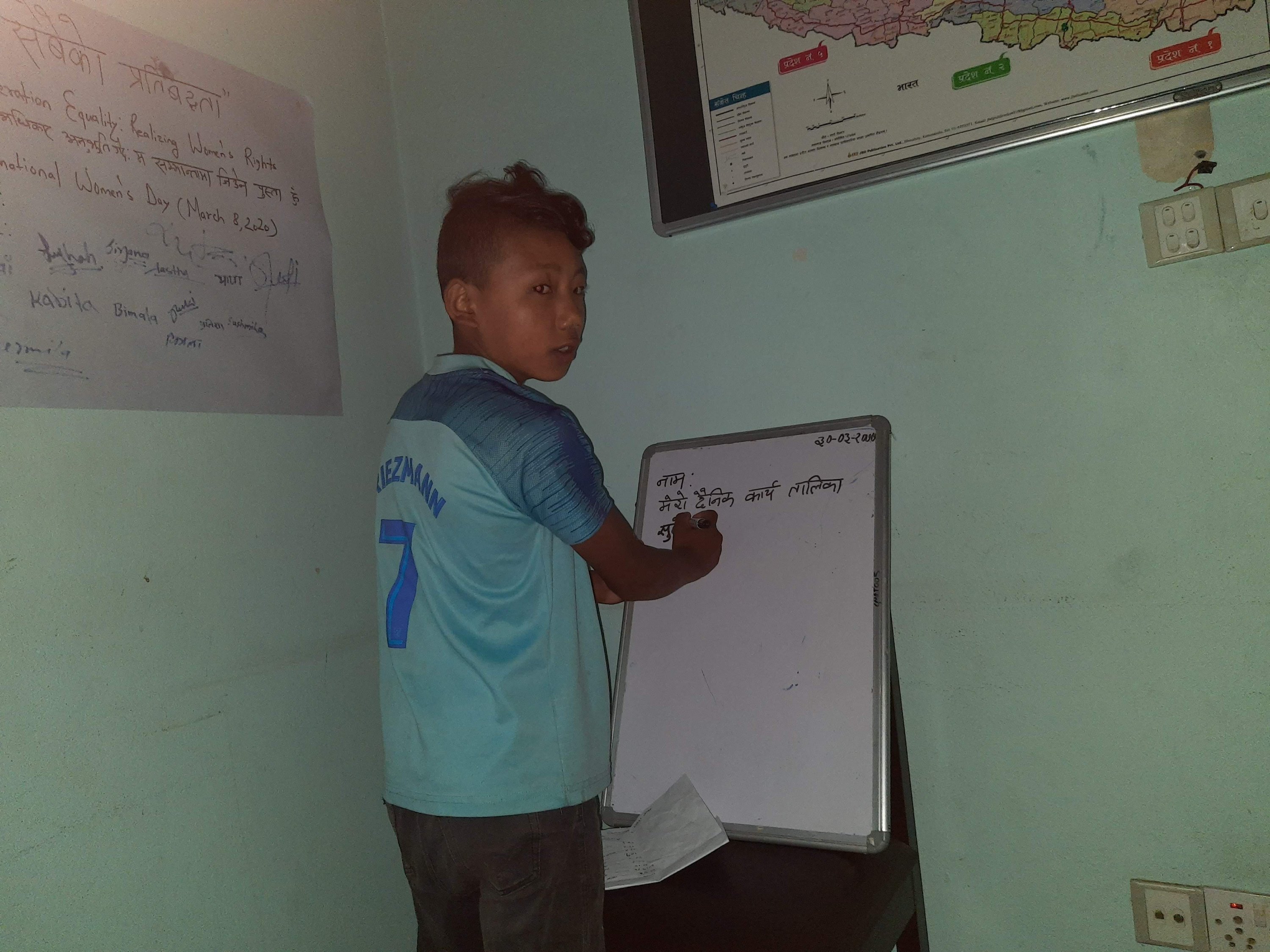
Nikhil is writing a daily timetable based on what he has learned.
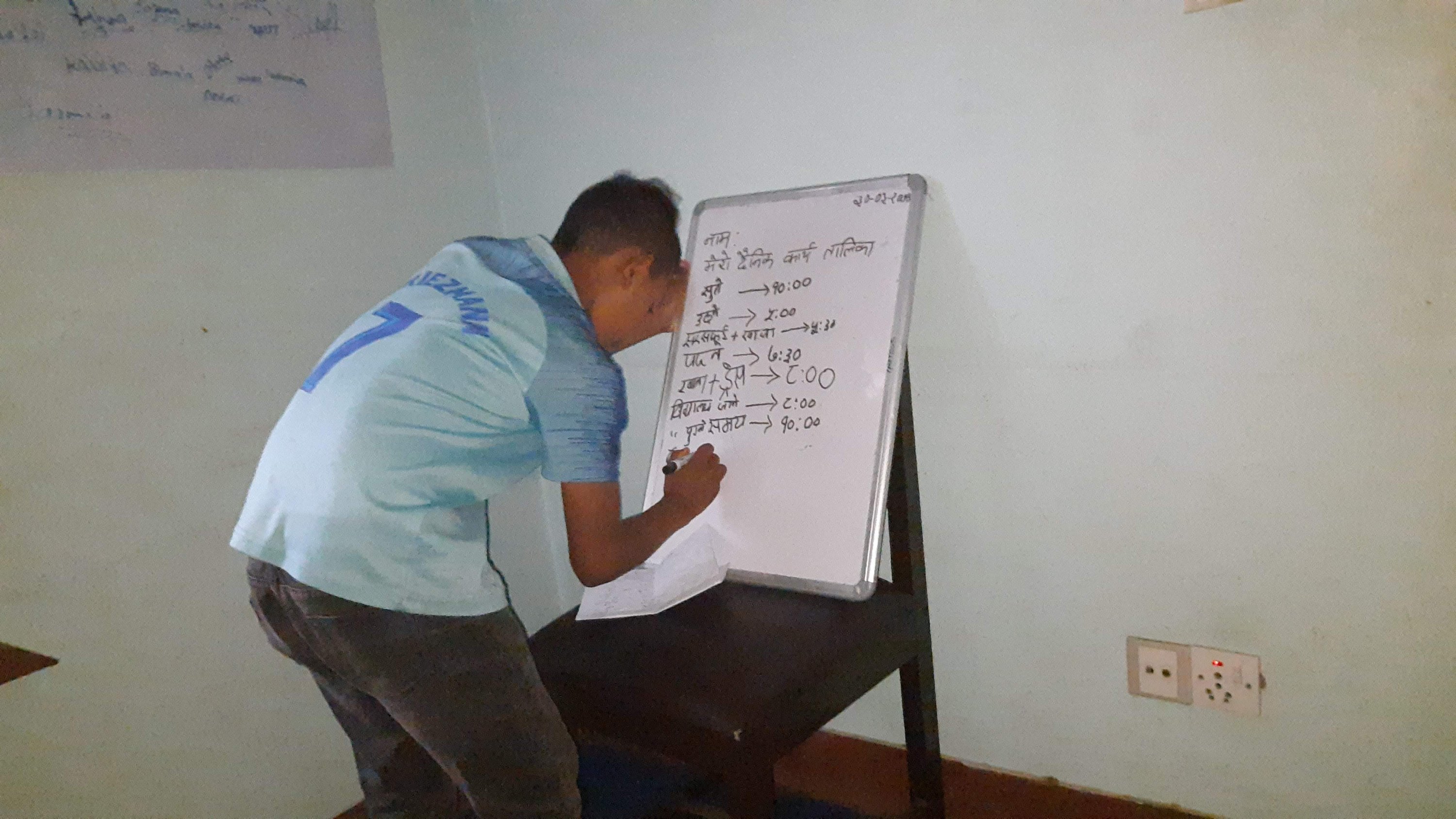
Copying from his note

The second step involved a consultation meeting that was initially impossible due to travel constraints for the staff to reach the village or for him to come over. However, in the second week, a volunteer managed to bring him. He stayed for two days, and during this visit, he was instructed on time management. His timetable was reviewed, which revealed that “he did not have time for study.” This timetable offered some hope, but it was also necessary to consult his parents to provide time and an environment conducive to studying.

Video: Nikhil presenting his time table

In the hills, we lead a distinct and unique life. During the monsoon, it becomes challenging to walk, and there’s a risk of landslides.

Loading

Limitless Hope in Uncertainties

Prevention is better than cure

Earth has been a challenging place for us and all living being. If we look at our cloths that we are wearing, it is either thin or thick that might be according to what we are feeling warm or cold. And, is not it is directly connected to the changing weather? Or, how do you select for your body? Right here, I suggest that if you have not considered nature as adversaries for surviving, then please start thinking about it. When was the last time you flew to another place? It is an innovation that has brought world nearer. It is really useful and meeting the need by shortening the time that used to take more hours or days before. Still plane manufacturers and scientists are exploring ways to shorten the time taken shown in Discovery TV Channel. My grandfather used to share that reaching the nearest place taking 2-hours now by road used to take 3-days; he used to walk up the hill, passing jungles and rivers, needed to hold at villages or in cave at night. During monsoon it was challenging to cross rivers. But, since his height was 6.1 feet, he used to help other traveller to cross. There are stories on journey by foot when there were no vehicles and roads. But, concentrating the title of this article: Have not we human changed the picture of past, created uncountable wearable, edible and usable goods in different form, shapes and sizes, tastes and colours that is troubling enough? In Nepal we can find bread made by Nanglo, a bakery company that has expiry date clearly mentioned in it. It is a tiny example, I have experienced that as the expiry date approaches, the color of crust or end piece of bread was changing into green and next day suddenly white moist was seen. The fact is that human made things has limitations. Is not anything manufactured caution safety matters? However, safety and precautions are applied producing goods or designing services, the end of human life is sure.

Human being is better journeying days to reach from one place to another. It helped to keep physically fit, caring the environment and increase and develop close intimacies between human beings. Moreover, it helped to understand the controls of nature.

Similarly, the current situation created by coronavirus health pandemic, death/life situation is not only the time that uncertainties and safety concerns. Every time when we travel by or drive modern means, we follow rules because risks matters most. Now, yes, it is stupid to talk about hope but better first to talk about fearlessness because if a person has hope he/she do not have fear, mostly fear of death. Those who have not found full happiness or a little happiness then fear of the current situation kills. As well as every moment is fearful because of the lack of hope. The another fact is that the world is full of fear. And, crossing the limitations has brought us into this hopeless situation. Thus, those who have been living understanding the fact about the limitations and the unlimited love that is already available for us have no fear of this kind of sudden situation. Because, once human being has crossed the limitations failing to follow the advise though there was limitless environment managed by the creator.

The earth is in such a situation that a result of uncaring prevention. Squeezing the margins between risk and safety/caution is the result of current situation.

Loading

Communities Affected

People have been settled in Hills from long ago

There are 3-types of communities that Console Mission has been caring.

  1. Rural communities
  2. Slum communities
  3. Abandoned Rescued Shelter Homes

Lockdown was effective since March 24 to curb the spread of COVID-2019 in Nepal.

Until yesterday, 19063 cases were detected coronavirus positive. 3,52,307 Polymerase Chain Reaction (PCR) tests and 312,402 Rapid Diagnostic Tests (RDT) were done. Yesterday 311 cases were detected, compared to day before yesterday 172 new cases were detected. On July 27, 139 were detected. In last 24 hours 88 cases were confirmed and 2 died in Lalitpur district where Console Mission is located.

Monsoon has been affecting lives of the village communities and slum. Slum is located nearby the river. Flood devastated 339 houses there. Before lockdown Console Mission reached each house learned that there are 339 households. Communicable disease’s symptoms were checked. And, 18 cases that showed symptoms were rechecked and helped to take appropriate action.

A person who had itchy rashes in his skin were suggested to visit nearby Medical Test called Sparsha Nepal. His daughter had similar rashes.
Rash seen in her face
Part of slum seen nearby river
A woman was guided for test whose test for the time being was negative. A local volunteer was show Sparsha Nepal where HIV symptoms detected could be guided.

There are 3 Rural Village Municipalities called Bagmati, Konjyosom and Mahankal. Under it 7, 5 and 6 wards are found respectively. Console Mission reached and raised hope in 5 wards of 3 Village Municipalities.

Console Mission has been focusing Preventive Health and Ethical Education. And, relevant community empowering activities were managed.

Now, these rural communities started imagining about their habitat because every monsoon, certainly prone to earthquake, landslides and floods creates uncertainties. Now, for the concerning body, income matters than preventing citizens from disease.

In a developing country, might citizens make ways to manage lives themselves. Instead of getting support, there are no ways than resisting distractions and carry on earning. How could you survive if citizens don't earn?

Read More

Loading

Public School in Nepal

A place managed by the Government of Nepal for study.

Assembly at Public School before starting class
Classroom in rural, built new after earthquake
Similarity found in different public schools
3 students passed Examination journeying to school every day were encouraged with Dictionary in 2019
Student presentation on what they learned
Preventive chemotherapy for Soil-transmitted Helminths
Health Program at school, role playing

“It is health that is real wealth and not pieces of gold and silver.” Mahatma Gandhi

Poster on communicable disease provided for household at rural area that includes prevention and information about the causes

Loading

A man takes his wife to Bir Hospital on a push cart for dialysis

Dambar Bahadur Simkhada, who sells vegetables to earn a living, says the lockdown has robbed him of his business and deprived him of any means to take his wife to the hospital.

A year ago, Dambar Bahadur Simkhada was working in Qatar while his wife Sita was taking care of their farm in Dhading’s Ganga Jamuna Rural Municipality.

Suddenly, both of Sita’s kidneys failed. She had diabetes and high blood pressure. Dambar was compelled to return to Nepal to take care of his wife.

“I was working in a good company in Qatar,” said 42-year-old Simkhada. “I had planned on returning to Qatar after Sita’s treatment.”

Dambar brought his wife to Kathmandu after doctors told him that she needed regular dialysis. The couple rented accommodations in Samakhushi, Kathmandu and Sita started to undergo free-of-cost treatment at a nearby dialysis centre.

The dialysis centre closed down when the government announced a nationwide lockdown. Dambar managed to get to Bir Hospital, after hearing that dialysis was available there. The hospital told him that he needed a referral from the Health Ministry.

He managed to get a referral and since then, has been taking his wife to Bir Hospital on a push cart.

“It has been two weeks since I started taking my wife to Bir Hospital,” Dambar said. “It is hard to get a taxi and even if you manage to get one, it’s not affordable.”

Dambar sells vegetables for a living and ever since the lockdown, he’s lost all business.

“This lockdown not only robbed me of my business, but it has also deprived me of any means to take my wife to the hospital,” he said.

Loading